Department of Electrical and Electronics Engineering

About Department

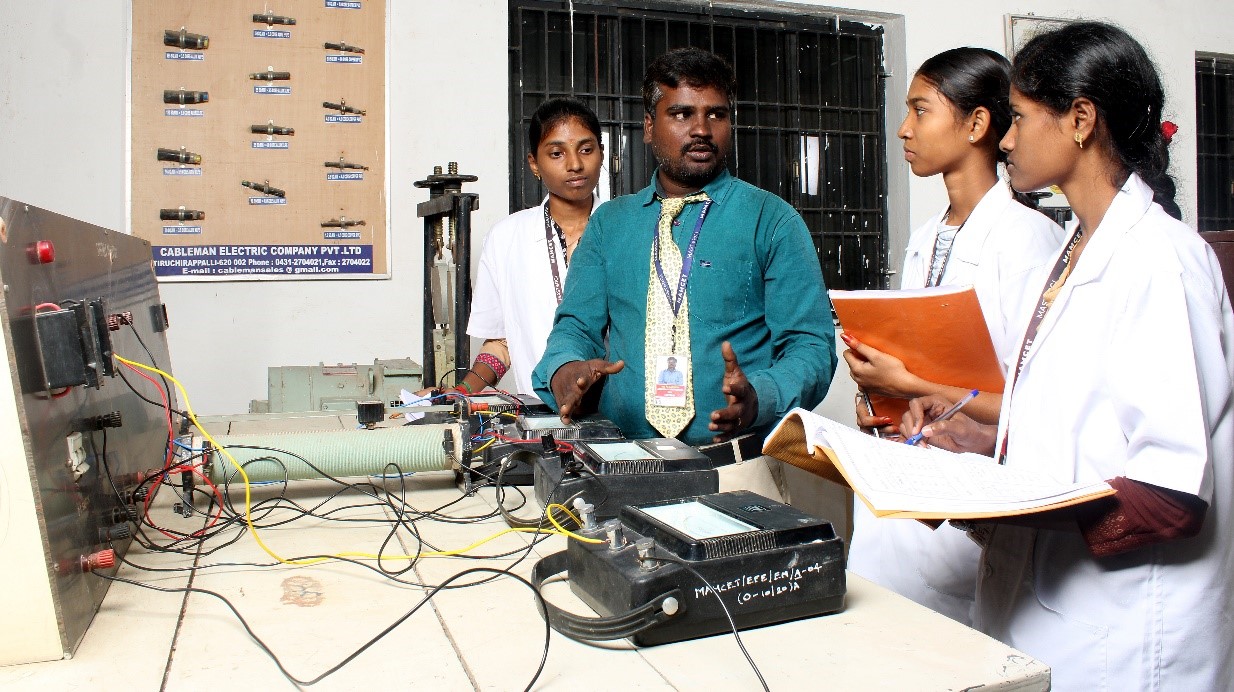
The Department of Electrical and Electronics Engineering, established in 2008, focuses on providing students with a robust academic foundation and real-world readiness. Offering a four-year B.E program, our faculty, with industry and academic expertise, ensures a holistic learning experience. Our facilities include state-of-the-art laboratories in Power Electronics and drives, Electrical Machines Lab, Control and instrumentation lab, Power system simulation lab, and R & D lab. We hold professional memberships with esteemed societies like IEI and PALS, IIT Madras, fostering industry-academic ties. Collaborations through MOUs with reputed industries enable activities such as guest lectures, workshops, and industrial visits, enhancing practical exposure.

Internships with renowned companies contribute to a consistent placement record above 85%. Graduates find opportunities in Power industries, Government PSUs, R&D Units, IT, Telecommunications, Manufacturing, and Startups. The department’s dedication to bridging academia and industry, coupled with diverse career paths, makes it a dynamic hub for Electrical and Electronics Engineering education. “Without Power a Man is Zero” and “With Power, a Man is a Hero” encapsulate our commitment to empowering future professionals.

Vision

To mould the young minds of Electrical and Electronics Engineering professionals with high standard of education, research and innovation to serve the society ethically.

Mission

  • To provide comprehensive education for the students to excel in the field of Electrical and Electronics Engineering.
  •  To facilitate a supportive environment to enhance research and innovation.
  • To impart industry oriented technical skills through collaborative activities.
  • To inculcate professional ethics and human values among student community.
  • To nurture the communication and leadership skills among students through multidisciplinary activities.

Programe Educational Objectives(PEO)

  • To equip students with a strong foundation in technical knowledge and skills in Electrical and Electronics Engineering, enabling them to excel in their chosen careers.
  • To develop students’ communication skills, enabling them to effectively convey technical information and collaborate with others in a professional setting.
  • To foster creativity and innovation among students, encouraging them to think critically and solve complex problems in Electrical and Electronics Engineering.
  • To instill students to demonstrate ethical behavior and professional responsibility in their work.

PROGRAM OUTCOMES (POs)

  • Engineering Graduates will be able to
  • PO 1 Engineering Knowledge: Apply the knowledge of mathematics, science, engineering Fundamentals, and an engineering specialization to the solution of complex engineering problems
  • PO 2 Problem Analysis: Identify, formulate, review research literature, and analyze complex engineering problems reaching substantiated conclusions using first principles of mathematics, natural sciences, and engineering sciences.
  • PO 3 Design/ Development of Solutions: Identify, formulate, review research literature, and analyze complex engineering problems reaching substantiated conclusions using first principles of mathematics, natural sciences, and engineering sciences.
  • PO 4 Conduct Investigations of Complex Problems: Use research-based knowledge and research methods including design of experiments, analysis and interpretation of data, and synthesis of the information to provide valid conclusions
  • PO 5 Modern Tool Usage: Create, select, and apply appropriate techniques, resources, and modern engineering and IT tools including prediction and modelling to complex engineering activities with an understanding of the limitations.
  • PO 6 The Engineer and Society: Apply reasoning informed by the contextual knowledge to assess societal, health, safety, legal and cultural issues and the consequent responsibilities relevant to the professional engineering practice.
  • PO 7 Environment and Sustainability: Understand the impact of the professional engineering solutions in societal and environmental contexts, and demonstrate the knowledge of, and need for sustainable development.
  • PO 8 Ethics: Apply ethical principles and commit to professional ethics and responsibilities and norms of the engineering practice.
  • PO 9 Individual and Team Work: Function effectively as an individual, and as a member or leader in diverse teams, and in multidisciplinary settings.
  • PO 10 Communication: Communicate effectively on complex engineering activities with the engineering community and with society at large, such as, being able to comprehend and write effective reports and design documentation, make effective presentations, and give and receive clear instructions.
  • PO 11 Project Management and Finance: Demonstrate knowledge and understanding of the engineering and management principles and apply these to one’s own work, as a member and leader in a team, to manage projects and in multidisciplinary environments.
  • PO 12 Life-long learning: Recognize the need for, and have the preparation and ability to engage in independent and life-long learning in the broadest context of technological change.

PROGRAM SPECIFIC OUTCOMES(PSOs)

  • To design, develop, and implement modern technologies for solid state devices and circuits, control systems, and power systems by incorporating principles from basic science, engineering science, humanities, and social science.
  • To analyze and evaluate the performance of electrical & electronic systems using simulation and modeling techniques.
Faculty Profile
Sl. No Name Designation
1Dr. S. RajasekaranDEAN / Professor
2Dr. B. MuruganandhamRegistrar / Professor
3Mrs. S. RakkammalAsso. Prof. & HoD
4Mrs. A. Mary BeulaAssociate Professor
5Mr. N. MayavelAssistant Professor
6Mr. R. SurendarAssistant Professor
7Mrs. L. Gladia AmalaAssistant Professor
8Mr. J. NagendranAssistant Professor
9Mrs. S. SelviAssistant Professor
10Mr. M. Vijay AnandAssistant Professor

Laboratory Specification

Electrical machines laboratory

S.No

Name of the Major Equipments

1.      

Slip ring induction motor

2.      

Squirrel Cage Induction Motor

3.      

Synchronous motor

4.      

DC shunt motor

5.      

Alternator coupled with DC Shunt motor

6.      

DC series motor

7.      

DC compound motor

8.      

Three phase Transformer

9.      

Single phase Induction motor

10.   

Single phase Autotransformer

11.   

Three phase Autotransformer

12.   

Shunt motor-Generator set

13.   

Shunt motor -series generator set

14.   

Shunt motor -compound generator set

15.   

Resistive load bank (3phase & 1 Phase)

16.   

Capacitive load bank

17.   

Inductive load bank

Cost:

Rs.33.68 Lakhs

Area:

2613 Sq.feet

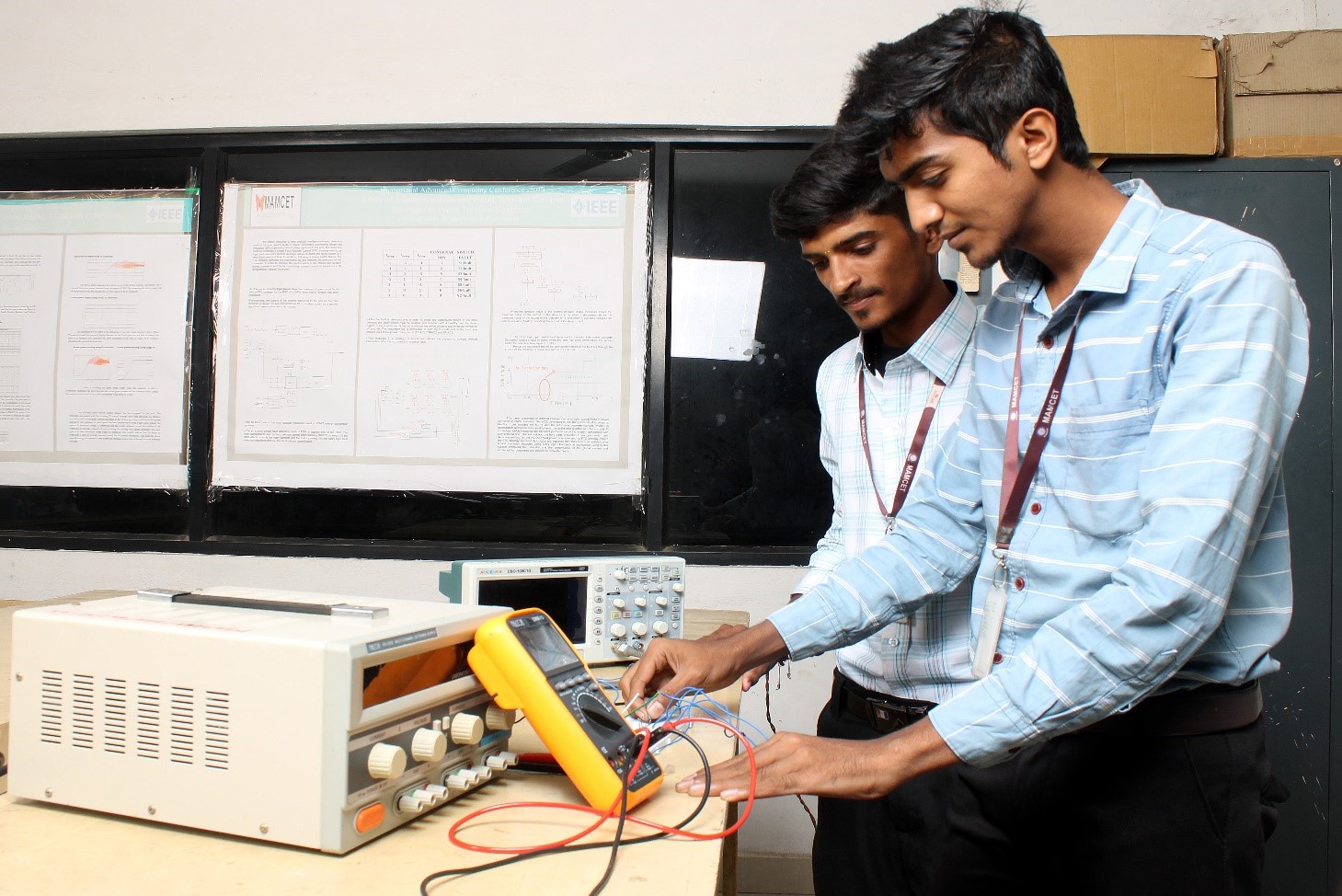
Power Electronics and Drives Laboratory

S.No

Name of the Major Equipments

1

IGBT based PWM Single phase Inverter

2

MOSFET based chopper IGBT Based chopper

3

SCR & TRIAC based Single phase AC controller

4

Single Phase Half Controlled Converter

5

Single Phase Fully Controlled Converter

6

Three phase SCR Fully controlled converter

7

Three phase Half controlled converter

8

Single Phase Cyclo Converter

9

MOSFET based step-up & step-down chopper

10

Buck converter

11

Boost converter

12

Buck-Boost converter

13

Resonant Converter

14

Characteristics of PMBLDC Motor

15

CRO &DSO

Cost:

Rs.9.69 Lakhs

Area:

720 Sq. feet

Control System and Instrumentation Laboratory

S. No

Name of the Major Equipments

1.      

PID controller simulation and learner kit

2.      

DC motor coupled with Generator

3.      

Pressure champer with Air foot pump

4.      

Flow Measurement Trainer kit

5.      

Function Generator

6.      

Position Control Systems Kit

7.      

AC Synchro transmitter & receiver

8.      

Optical sensor

9.      

Strain Gauge Kit with Handy lever beam

10.   

Design of Lag-Lead compensator

11.   

ADC Trainer Kit

12.   

DAC Trainer Kit

13.   

LVDT Trainer Kit

14.   

CRO

15.   

DSO

Cost

Rs 7.38 Lakhs

Area

714 Sq.feet

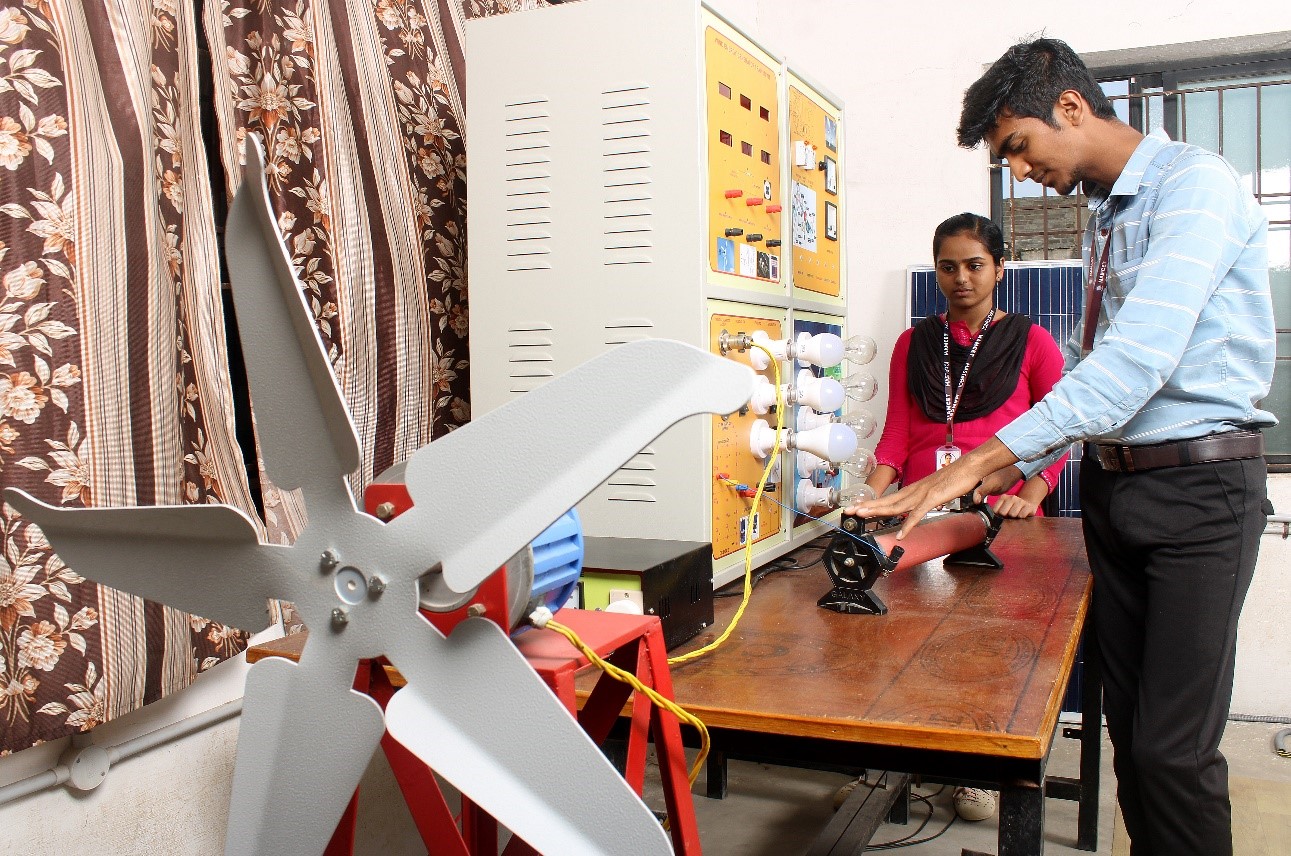
Renewable Energy Laboratory:

S. No

Name of the Major Equipments

1.      

Personal computers (Intel i3, 80GB HDD, 2GB RAM)

2.      

PV panels

3.      

Battery storage system with charge and discharge control 40Ah

4.      

Micro Wind Energy Generator module

5.      

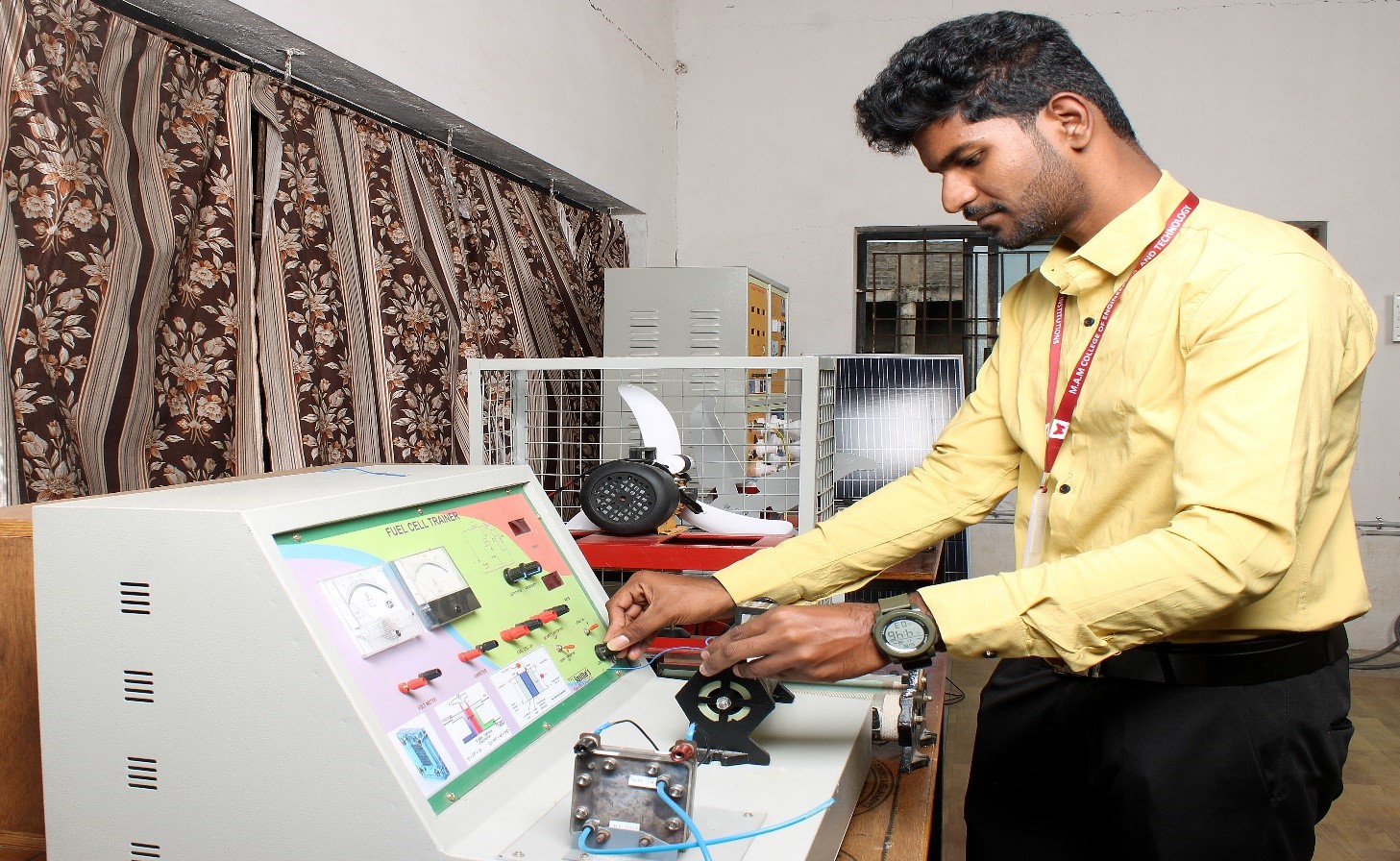
Fuel Cell Trainer

6.      

Open Source Softwares

SCI lab

Xcircuit

Cost:

Rs 6.26 Lakhs

Area:

687 Sq. feet

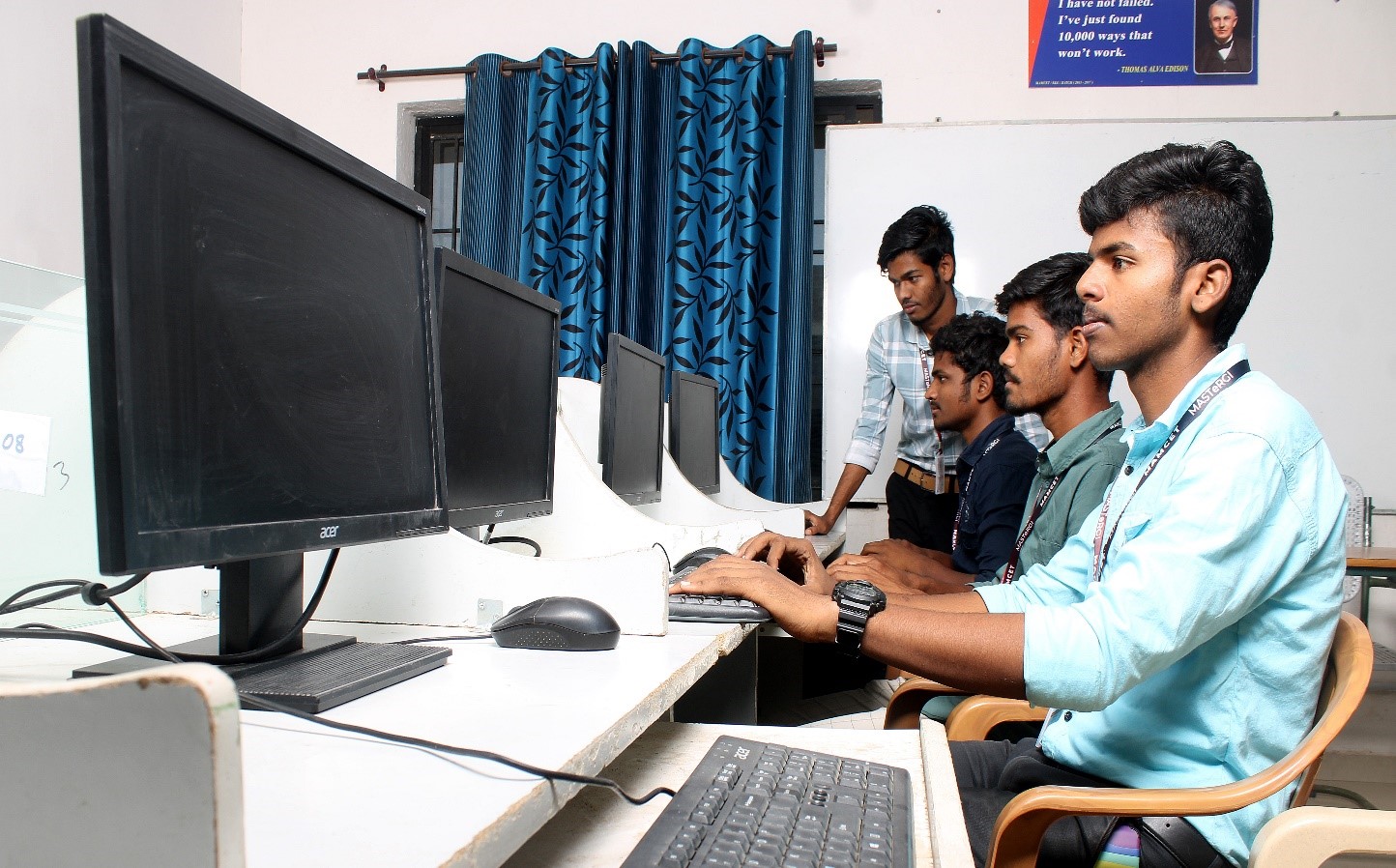
Power System Simulation Laboratory:

S.No

Name of the Major Equipments

1.      

Personal computers

(Intel i7,16GB RAM, 128GB SSD+1TB HDD)

2.      

Printer

3.      

Open Source Softwares

SCI lab

Xcircuit

MatPower

Cost:

Rs 7.71 Lakhs

Area:

684 Sq.feet

Ampere’s Advanced Research Lab

S.No

Name of the Major Equipments

1.      

Personal Computers

(Intel i7,16GB RAM, 128GB SSD+1TB HDD)

2.      

IoT Kit

3.      

Charging Equipment for EV

4.      

PV Emulator

5.      

Solar and micro wind setup

6.      

MASTeR Green Power plant of 25 KW on Grid

Cost

Rs. 12.86 Lakhs

Area

687 Sq. feet

PLACEMENT DATA

[ninja_tables id="6783"]
[ninja_tables id="6598"]
[ninja_tables id="6787"]

Research

Research

The research and development is dedicated to nurturing a robust research culture by encouraging exploration in newly emerging and challenging areas within the EEE firms. Our dedicated faculty members and ardent  students actively participate in projects that address real world challenges, making meaningful contributions to society. this enhances overall research capabilities of faculty and students through getting projects funds, publishing papers and participating in conferences seminars, workshops, project competitions etc.

In the Electrical and Electronics Engineering (EEE) department, our research and development efforts are passionately committed to fostering a vibrant research culture. We prioritize exploration in newly emerging and challenging areas within the EEE domain, driven by a vision of innovation and societal impact. Our dedicated faculty members and enthusiastic students dive into projects that tackle real-world challenges, making significant contributions to society. This dynamic environment not only propels technological advancements but also enhances the overall research capabilities of our faculty and students. Organize and participate in workshops, seminars, and training sessions to stay updated with the latest advancements and share knowledge. This comprehensive approach ensures that the department remains at the forefront of innovation, contributing significantly to both academic excellence and societal progress.

Objectives:

To conduct cutting-edge research and development in electrical and electronic engineering, aiming to innovate, solve industry challenges, and advance knowledge in areas such as renewable energy, power systems, electronics, and communication technologies.

Outcomes:

To generate innovative ideas and solutions to the academic and societal problems.

To enhance students’ and researchers’ skills through hands-on experience with advanced equipment and techniques.

To facilitate Interdisciplinary/Multidisciplinary research.

To promote research activity resulting in publications in reputable journal and conferences

To incur an external funding through grants and sponsorship to support further research initiatives

Student Project Involvement

To encourage the participation of research-oriented students in developing activities

To assist students in applying for funding from various agencies such as TNSCST, MSME, and IE(I) under the student project scheme, facilitating research and startup initiatives.

Project Proposal using R&D Lab:

To assign the senior faculty to various research organizations for getting collaborative projects and adopting best practices

 To assist applying and getting funds for organizing seminars, workshops, and faculty development programs (FDPs) from various funding agencies.

To foster research activity within the academic community, for developing strategies and goals to promote growth in this area.

Research Activity

To develop new technologies, products, and solutions that address current challenges or improve existing systems in electrical and electronics engineering.

To promote publication of research findings in reputable journals and conferences, contributing to the dissemination of knowledge and advancing the field.

To create ambiance among the staff members to take up Research projects and improve their knowledge, skills and qualifications by registering Ph.D‘s

To create intellectual property such as patents, copyrights, and trademarks for novel inventions and innovations.

 To assist in collaboration with industry partners to transfer research outcomes into practical applications, leading to commercialization opportunities and technology transfer.

To provide hands-on research experience for students, fostering skills in experimental design, data analysis, and critical thinking.

To contribute to the advancements in various sectors such as renewable energy, e-vehicle, healthcare technology, and automation.

To utilize funding from government agencies, industry sponsors, and foundations to support ongoing and future research initiatives.

[ninja_tables id="6623"]
[ninja_tables id="9766"]

[ninja_tables id=”9843″]

[ninja_tables id=”6636″]

[ninja_tables id=”6638″]

[ninja_tables id=”6640″]

[ninja_tables id="6616"]

Events

[extlsc id="6646"]
[extlsc id="6663"]
[extlsc id="6686"]

Curriculam & Syllabus

ACTIVITY BASED LEARNING

Memorandum of Understanding (MOU)

The industry supported laboratories develop the best learning process using a comprehensive understanding of industry’s best practices for both students and faculty. To strengthen interaction with industries and to keep our students updated with the latest trends in Electrical Engineering.

Industry supported Laboratories

Sl.No
Name of the company
Name of the laboratory
Year

1

Flowtrik EV charging solutions

EV Laboratory - II

2023

2

EV Nexus Pvt.Ltd.

EV Laboratory - I

2023

MoU of Core industries

Sl.No
Name of the company
Year of MOU Sign

1

Flowtrik EV charging solutions

2023

2

EV Nexus Pvt.Ltd.

2023

3

Propeller Technologies

2022

4

Jet Aero Space

2022

5

Hilife.AI

2022

6

Eurocasting Engineering

2021

Industry Interaction

In-Plant Training

2022-2023

S.NO

Name of the Event

Date

Resource Person/ company details

Targeted Audience

1

Guest Lecture on Recent trends in EV and its challenges

3.03.2023

Dr. K. Padmanabhan,Director ,EV NEXUS Pvt. Ltd.

Second year, Third year and Final year

2

Seminar on Design and modeling of E-Vehicle.

18.08.2022

Er. A. Abdhaheer,

Sr. Testing and Commissioning Engineer,

SPK Power infra–Pvt Ltd.

Second year, Third year and Final year

2020-2021
S.NO Name of the Event Date Resource Person/ company details Targeted Audience
1 Guest lecture on Fundamentals in Ethics of Technology. 16.04.2021 Mr. Naveen Kumar Govindaraj,Senior Testsing Engineer,CTS, Bangalore Second year, Third year and Final year
2 Guest lecture on Industrial Automation Using PLC 04.02.2021 Mr.Rasadurai Murugesan,Lead Engineer from GM Tech center India ,Bangalore. Second year, Third year and Final year
3 Webinar on Introduction to LABVIEW 21.06.2020 Ms.J.Ajantha
Patent scientist,Dextrasys Private Limited.
Second year, Third year and Final year
 

Industrial Visit

S.No

Academic Year

Industry Name with Address

Area of visit

No. of students participated

Type of Industry

(Core/Non-core)

1

2021-2022

Munnar Tea Factory, Munnar

Electrical Drives and Control

79

Core

2

2022-2023

Sandal Wood Oil Division, Mysore, Karnataka

Industry Automation

55

Core

3

2022-2023

TATA Solar Power Plant, Musiri(Tk), Trichy

Solar Power Plant Operation and maintenance 

79

Core

Internship Details

2023-2024

S.No

Name of the   Company

Internship  Details

No. of students participated

1

Vagus technology, Trichy.

Digital Marketing

6

2

Witspire, Trichy

Basic Embedded System

10

3

Dynamic hands and control ltd. Chennai.

Electrical Division

1

4

Power Integrated salutation, Trichy

Electrical Division

4

5

AJ Tech research lab, Coimbatore

Marketing

1

6

Code Bind Embedded system, Trichy.

sic Embedded System and IoT

1


2022-2023

S.No

Name of the   Company

Internship   Details

No. of students participated

1

CRI Pumps,Coimbatore

Electrical Division

4

2

ABC Programming,Chennai

Digital Marketing

1

3

Muskurahat Foundation,Mumbai,Maharastra.

Crowd Funding

1

4

Maxelerator Foundation,Madurai.

Basic Embedded sytem and IOT

1

5

Hamari Pahchan NGO

Social Entrrpreneurship

1

2021-2022

S.No

Name of the   Company

Internship   Details

No. of students participated

1

PT series,Chennai.

Marketing

1

2

Lead And Seal,Chennai.

Core

1

3

Global Marketing Media,Pune.

Marketing

1

4

Amazon private limited,Trichy

Marketing

1


NEWS LETTER

MAGAZINE

MAGAZINE 2020 - 2021

MAGAZINE 2021-2022

MAGAZINE 2022- 2023

Value Added Courses

2023-2024

Title: Value added course on “IoT Concepts and its Applications"

Resource Person : Mr. M. Madhan Kumar, Power Integrated Solutions, Trichy

Date: 01-03-2024 to 06-03-2024

2022-2023

Title: Value added course on sensors and embedded system evaluation using Arduino

Resource Person : Mr.M.Madhan Kumar, Power Integrated solutions, Trichy 

Date: 21-04-2023 to 29-04-2023

2021-2022

Title: Value added course on Design of solar PV for Domestic Load

Resource Person:  S.Ramkumar, Industrial Automation Engineer/PLC&SCADA Developer

Date: 12.07.2021 to 23.07.2021


Title: Value added course on Electric and Hybrid Vehicles

Resource Person:  Dr.Kevin Ark Kumar, Manager BHEL, Trichy & Dr.Selvaraj Professor, REC,  Chennai

Date: 14.12.2020 to 24.12.2020


Title: Value added course on IoT for Real Time Applications

Resource Person:  Mr.M.Vinothkumar, Mr.A.Rathinavel, Mr.R.Surendar Assistant Professor/EEE

                               MAMCET

Date: 20.10.2020 to 05.12.2020


Title: Value added course Energy Management and Energy Auditing

Resource Person:  Mrs.A.Marybeula, Mr.R.Vadevelan, Mr.N.Mayavel, Assistant Professor/EEE  MAMCET

Date: 20.10.2020 to 05.12.2020

Get in touch

Dr.RAJASEKARAN.S

Professor & Head/EEE, MAMCET, Trichy.
MAIL ID: hod.eee@mamcet.com
Mobile no : 9994013168

MAMCET